

Energy Efficiency in the Electronics Industry: Power Electronics, Trends & Solutions
Rising electricity prices, regulatory pressure, and the electrification of industry, mobility, and infrastructure make energy efficiency a central requirement for the electronics industry. Power electronics plays a key role here as a core technology for efficient energy conversion. electronica 2026 is dedicating one of its three main themes to this topic and will showcase the solutions the industry has to offer from November 10–13 in Munich.

- Energy efficiency is not a trend, but a decisive competitive factor for the electronics industry
- Power electronics controls the conversion, storage, and distribution of energy—it is the key enabler
- Wide-bandgap semiconductors such as SiC and GaN are setting new standards in efficiency and power density
- Energy efficiency is determined at the system level—through the interaction of hardware, software, and data
- electronica 2026 is the central platform for experiencing power electronics solutions and energy efficiency technologies across the entire electronics value chain
Those who take energy efficiency seriously need more than good intentions: It’s about the right semiconductor materials, the right system architecture, and the knowledge of which solution is suitable for which application. This page showcases the current state of the art and how electronica 2026 helps you make the right decisions.
Power Electronics: Key Technology for Efficient Electronics
Energy efficiency begins where electricity is controlled and converted. That is precisely the role of power electronics: it regulates how electrical energy is generated, stored, distributed, and used—and how much energy is lost in the process.
That may sound abstract, but it isn’t: Power electronics is found in frequency converters for industrial motors, in the charger for your electric car, in the inverter of the photovoltaic system on your roof, and in the power supply unit of every data center.
The most important components are power semiconductors: classic types such as MOSFETs and IGBTs, as well as newer materials based on silicon carbide (SiC) and gallium nitride (GaN), Sensors and microcontrollers provide the necessary measurement and control layer. They detect operating conditions and make control decisions directly on-site, without going through the cloud.
Today, energy efficiency is achieved at the system level. Optimizing individual components is no longer enough. What matters is the interplay between hardware, software, and control systems. Those who shape this transition will secure long-term competitive advantages. At electronica 2026, you can follow this development live.
Why Power Electronics Is So Important Right Now
Power electronics was long considered a niche topic in electrical engineering. That has changed fundamentally. Several developments now make it one of the most in-demand technologies of all:
- Electric mobility: In 2025, over 20 million electric vehicles were sold worldwide. Power electronics determines range, charging time, and battery life.
- Energy transition: Photovoltaic inverters, battery storage, and charging infrastructure are not feasible without power electronics.
- Digitalization: AI applications are driving the power demand of data centers. Efficient power electronics is a key lever for cost reduction.
- System integration: Value creation is increasingly taking place at the system level, no longer in individual components.
- Material Innovation: Wide-bandgap semiconductors based on silicon carbide (SiC) and gallium nitride (GaN) are replacing conventional silicon—with higher efficiency, a more compact design, and lower losses.
- Bidirectional energy flows: Vehicle-to-Grid (V2G) and smart grids are placing new demands on power electronics.
The market is responding: Wide-bandgap semiconductors based on SiC and GaN are increasingly regarded as the core technology of modern electrified systems. At electronica 2026, you’ll see which solutions are ready for the market and which technologies will define the next generation of efficient electronics.
Application Areas: Circular Economy, Automation, Connectivity, and Smart Mobility
Energy efficiency is not an abstract principle, but manifests itself in concrete applications. Five areas are at the center of this:
Circular Economy
True energy efficiency doesn't end with the sale of a product. It encompasses the entire life cycle: from energy-efficient production through operation to recycling. Durable components, modular designs, and the ability to repair (design-for-repair) play just as much of a role as the energy requirements of the manufacturing process itself. The EU Ecodesign Regulation 2024/1781 sets the regulatory framework for this—it mandates sustainable products and digital product passports.
Automation
In industrial automation, energy efficiency is achieved through precisely controlled processes. Sensors monitor the status of machines and systems in real time. Variable-frequency drives control motors based on actual demand rather than running them continuously at full power. Edge AI (or artificial intelligence directly within the device) makes it possible to avoid peak loads and detect maintenance needs early on. The result: lower energy consumption and fewer unplanned outages.
Connectivity in the IoT
Energy can only be optimized where it is visible. Networked sensors, smart meters, edge gateways, and energy-efficient wireless technologies make energy flows measurable and controllable at the device, building, and infrastructure levels. This creates the foundation for smart grids—intelligent power grids that automatically balance supply and demand in real time.
Smart Mobility
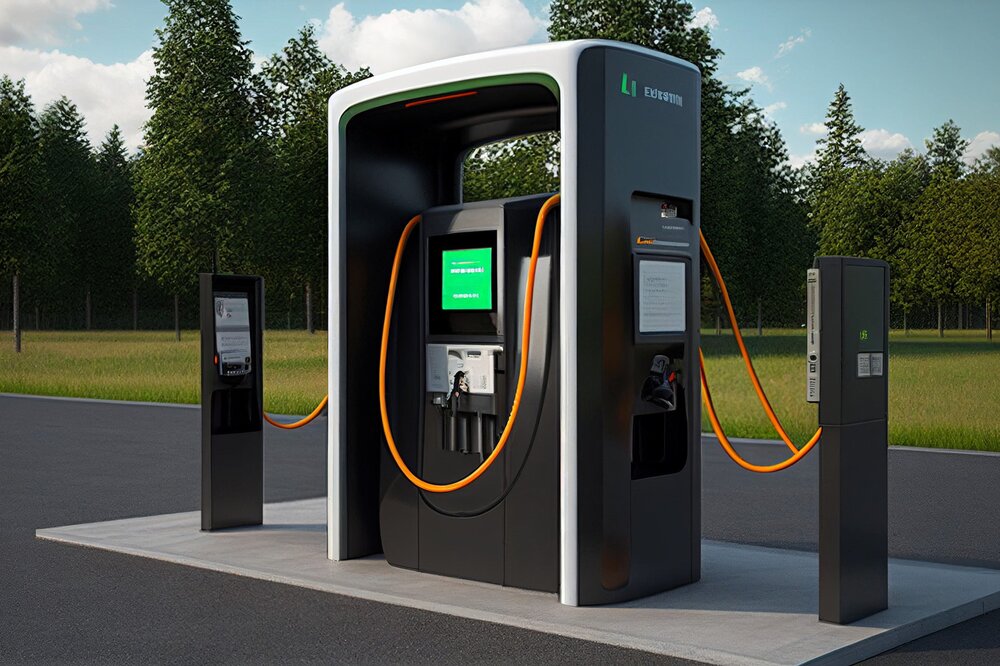
In electric vehicles, energy efficiency directly determines range, charging speed, and battery life. Intelligent battery management systems (BMS), traction inverters, SiC-based power semiconductors , and onboard chargers form the electronic foundation. Added to this are vehicle-to-grid (V2G) functions, which allow vehicles to feed excess energy back into the grid.
>> More on the topic of automotive at electronica
Electromechanics and Connection Technology
Energy efficiency doesn’t start with semiconductors. Connectors, terminals, enclosures, and cable routing also play a role: High contact resistance or poor electromagnetic compatibility (EMC) cause losses that quickly add up across an entire system. This is particularly true in industrial systems, charging infrastructure, and automation: Energy efficiency results from the interaction of all components, not from the optimization of individual parts.
Current Trends: How Efficient Electronics Are Evolving
The electronics industry is on the verge of a technological revolution. These developments will shape the coming years:
Wide-bandgap semiconductors are establishing themselves as the new standard
Silicon carbide (SiC) and gallium nitride (GaN) are gaining ground in an increasing number of applications: They have long been the standard in electric mobility, photovoltaic inverters, and high-power power supplies. The trend is accelerating because higher switching frequencies, lower losses, and falling manufacturing costs are making SiC and GaN economically viable for more and more applications.
From components to intelligent integrated systems
Efficiency is no longer achieved through better individual components alone. What matters is the interplay of power electronics, sensor technology, software, and connectivity. Software-based systems can be updated after purchase, optimized based on data, and flexibly adapted to new requirements. This opens up new business models, such as maintenance as a service or performance-based billing.
Edge AI and Decentralized Energy Intelligence
More and more computing power is moving directly into the device. TinyML (machine learning on resource-constrained hardware) and edge AI enable intelligent control decisions without going through the cloud. This shortens response times, reduces the load on networks, and makes systems more robust—particularly important for industrial drives, battery management systems, and networked infrastructures.
Bidirectional Energy Flows as a System Requirement
In the future, energy will flow in both directions: electric vehicles will feed excess energy back into the grid (Vehicle-to-Grid, or V2G for short), decentralized storage systems will buffer peak loads, and smart grids will automatically balance supply and demand. Power electronics must reliably manage this bidirectional operation while remaining open to different communication standards.
Standardization as a growth driver
Energy efficiency can only be scaled across an entire plant or infrastructure if devices from different manufacturers can communicate with one another. Without common interfaces and data formats, efficiency gains remain limited to individual products. For manufacturers and system integrators, open interoperability thus becomes a genuine competitive advantage.

Regulatory Framework: Energy Efficiency as a Mandatory Requirement
Energy efficiency is not only a technical requirement but also represents a market opportunity for the electronics industry. For companies, this means that those who invest in efficient products and processes now will reduce costs, meet regulatory requirements, and tap into new markets.
At the same time, regulatory pressure is growing. These regulations are particularly relevant for electronics companies in the EU:
- EU Ecodesign Regulation 2024/1781: Minimum requirements for products, energy efficiency, durability, recyclability, and digital product passports. For electronics manufacturers, this means that efficiency must be documentable, comparable, and traceable throughout the product lifecycle.
- CSDDD (effective July 25, 2024): Supply chain transparency, material origin, environmental impacts, and risk management are also relevant to electronics value chains.
- Cyber Resilience Act (CRA): A horizontal legal framework for hardware and software products with digital elements on the EU market. Requires that cybersecurity risks be taken into account throughout the entire product lifecycle.
- Scope 3 requirements: Increasing pressure to demonstrate the carbon footprint of electronic components across their entire lifecycle—from raw materials through manufacturing to recycling.
Technical and Organizational Challenges
Energy efficiency in electronics is more challenging in practice than in the lab. Companies should be aware of these hurdles:
- Rebound effects: Efficiency gains are partially offset when lower operating costs lead to increased usage or larger systems. Companies must evaluate efficiency not only at the component level but across usage scenarios and business models.
- System complexity: More sensors, software, and connectivity increase the potential for optimization, but also development effort, integration risks, and attack surfaces. The CRA addresses this issue directly.
- Conflicting objectives: Efficiency versus safety, miniaturization versus thermal robustness, performance versus lifespan. These conflicts must be resolved early in the system design process.
- Fragmented standards: Without common interfaces, data models, and communication standards, efficiency gains remain limited to individual products or proprietary platforms.
Experience the key theme of energy efficiency at electronica 2026
Energy efficiency is one of the three key themes of electronica 2026, alongside artificial intelligence and cyber resilience. From November 10–13, 2026, 3,500 exhibitors from 60 countries will demonstrate in 18 halls how modern energy-efficient electronics solutions are implemented in practice. What makes electronica special: All parts of the value chain are represented—from semiconductors to electromechanics, from individual components to finished system solutions.
You’ll find these solutions at electronica
From power semiconductors to smart energy systems and thermal management: electronica 2026 showcases the entire spectrum of efficient electronics:
- Power semiconductors and wide-bandgap: SiC and GaN MOSFETs, IGBTs, power modules, and driver ICs for all voltage and power classes
- Power conversion and drive technology: frequency converters, inverters, DC/DC converters, and bidirectional charging systems for industry and e-mobility
- Smart energy and storage systems: battery management systems, energy management platforms, and smart grid components
- Embedded AI and Edge Computing: Modules, systems, and platforms for energy-efficient AI inference directly on the device
- Sensors and IoT: MEMS -sensors, smart meters, gateways, and AIoT solutions for connected energy systems
- Thermal Management: Heat sinks, thermal interface films, liquid cooling, and thermal interface materials
- Electromechanics and Connectivity: Connectors, terminals, relays, enclosures, and interface solutions for energy-efficient systems in industry, e-mobility, and automation
The Supporting Program
In addition to the exhibition, electronica 2026 offers a high-caliber technical program focused on power electronics and energy efficiency:
- Power Electronics Forum: Technical presentations on wide-bandgap semiconductors, digital power management, and smart energy applications
- IIoT Forum: Industrial IoT, connectivity, and energy-efficient systems
- Circular Economy Forum: Energy efficiency in the context of sustainability and product life cycle
- electronica Automotive Conference (November 9, 2026): Electromobility, bidirectional charging systems, and vehicle-to-grid
- Networking events: Direct exchange with developers, buyers, and decision-makers
Why a visit to electronica is worthwhile
Anyone investing in efficient power electronics needs more than just datasheets. electronica 2026 is the place where technologies can be compared, decisions prepared, and partnerships forged:
A condensed market overview
Over four days, 3,500 exhibitors from 60 countries will showcase the current state of efficient electronics in Munich. Nowhere else can the entire spectrum—from power semiconductors and drive systems to smart energy platforms—be compared so efficiently.
Experience concrete solutions live
Products and systems can be experienced, compared, and discussed with manufacturers directly at the booth. This saves time compared to online demos and creates a solid foundation for technology and procurement decisions.
Networking on equal footing
Decision-makers, developers, and buyers from across the industry come together here. A direct conversation with a system partner or component manufacturer often yields more than weeks of research.
A solid foundation for investment decisions
Anyone looking to invest in new semiconductor technologies, smart energy solutions, or efficient drive systems needs a direct market comparison. electronica provides just that.
Frequently Asked Questions on the Key Theme of Energy Efficiency (FAQ)
Power electronics refers to the field of electrical engineering that deals with the conversion, control, and transmission of electrical energy. It connects the generation, storage, distribution, and use of electricity and determines how efficiently energy is converted into its various forms. Without power electronics, modern energy systems, electromobility, and industrial automation would not be feasible.
Compared to conventional silicon, silicon carbide (SiC) and gallium nitride (GaN) enable higher voltages, temperatures, and switching frequencies with lower losses. This leads to more compact designs and higher energy density. They are increasingly becoming the standard in electric mobility, photovoltaic inverters, and high-power power supplies.
Frequency converters adjust the speed of electric motors to actual demand and prevent energy waste during partial-load operation. Regenerative converters feed braking energy back into the grid. Edge AI and sensor technology enable adaptive motor control that reduces load peaks and optimizes the energy consumption of entire systems.
The EU Ecodesign Regulation 2024/1781 sets minimum requirements for products, energy efficiency, durability, and digital product passports. The Cyber Resilience Act requires security based on the “security-by-design” principle. The CSDDD mandates transparency across the entire supply chain, including the carbon footprint.
Smart Energy refers to intelligent energy systems that control generation, storage, distribution, and consumption in a networked manner. Power electronics, sensor technology, IoT gateways, and software form the technical backbone: inverters, battery management systems, and communicative switches enable smart grids and decentralized energy management systems.
In electric vehicles, energy efficiency directly determines range, charging speed, battery aging, and total costs. Intelligent BMS, SiC inverters, onboard chargers, and bidirectional charging systems form the electronic foundation. The more efficient the power electronics, the less energy is lost during conversion processes.
The Power Electronics Forum offers structured technical presentations and discussions on wide-bandgap semiconductors, digital power management, thermal design, and smart energy applications. It is aimed at developers, system architects, and decision-makers from the industrial, automotive, and energy sectors.
electronica is particularly relevant for developers and system architects evaluating power electronics technologies, for decision-makers seeking a market overview, and for buyers and sales managers looking for solution partners in the fields of energy efficiency, smart energy, and electromobility.
Exhibitors focusing on the key theme of energy efficiency
Leading companies in the electronics industry will present their latest products and solutions on the key theme of energy efficiency at electronica 2026: from semiconductors and power modules to embedded systems and electromechanics. You can see which industry giants and up-and-coming companies will be there in the exhibitor directory.