

Artificial Intelligence in the electronics industry
AI is transforming how electronics are developed, manufactured, and used. At electronica 2026, taking place November 10–13 in Munich, you’ll experience the latest developments and solutions in Edge AI, AIoT, Smart Mobility, and AI hardware—from semiconductors to embedded systems.

- Artificial intelligence has evolved from a trend topic to a concrete industrial application in nearly all markets within the electronics industry
- The AI boom is shifting value creation from pure hardware toward integrated, connected, and intelligent systems
- Key technologies such as Edge AI, AIoT, TinyML, and AI chips are driving this transformation
- Companies benefit from more efficient processes, new business models, and higher product quality
- electronica is the central platform for experiencing AI solutions, exhibitors, and innovations across the entire electronics sector
Artificial intelligence is increasingly evolving from a trend topic to a practical application. Companies that do not embrace AI are falling behind and risk competitive disadvantages in the medium term. electronica brings industry players together to drive the transfer of AI from the drawing board to real-world applications.
Artificial Intelligence in Electronics Industry—From Trend to Industrial Reality
Whether in industry, medical technology, or energy technology: there is hardly a market that does not rely on AI. The Stanford AI Index 2025 illustrates the momentum: private investment in generative AI reached $33.9 billion worldwide in 2024, while 78 percent of companies already reported using AI. At the same time, AI has long been a geopolitical issue as well. The conflict between the U.S. and China over advanced chips and export controls shows that AI is not only an innovation issue but also a strategic and political one.
Electronics serves as a strategic pioneer for the AI era. Without innovative semiconductor products, power electronics, or precise sensor technology, AI remains mere theory and fails to materialize in practice. Value creation does not occur in isolation at the component level, but rather through the interaction of components, systems, and software.
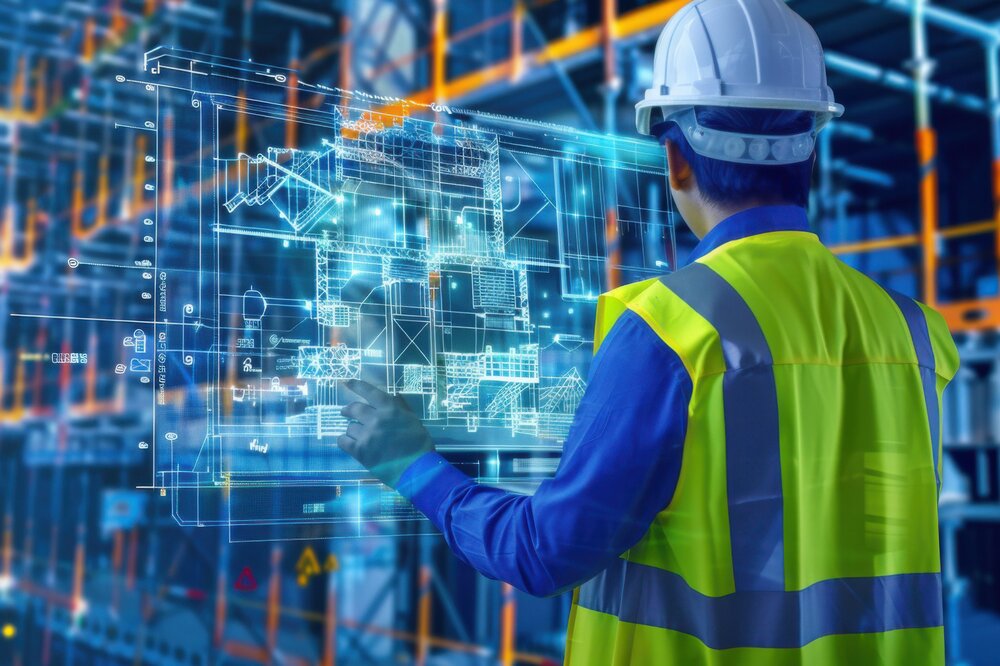
Why AI is so important for the electronics industry
AI does not function through software alone. For AI to be practically applicable at all, it requires:
- high-performance chips and AI accelerators
- precise sensor technology and embedded systems
- secure hardware and energy-efficient electronics
Value creation is therefore shifting: away from individual components toward complete intelligent systems comprising hardware, software, and AI.
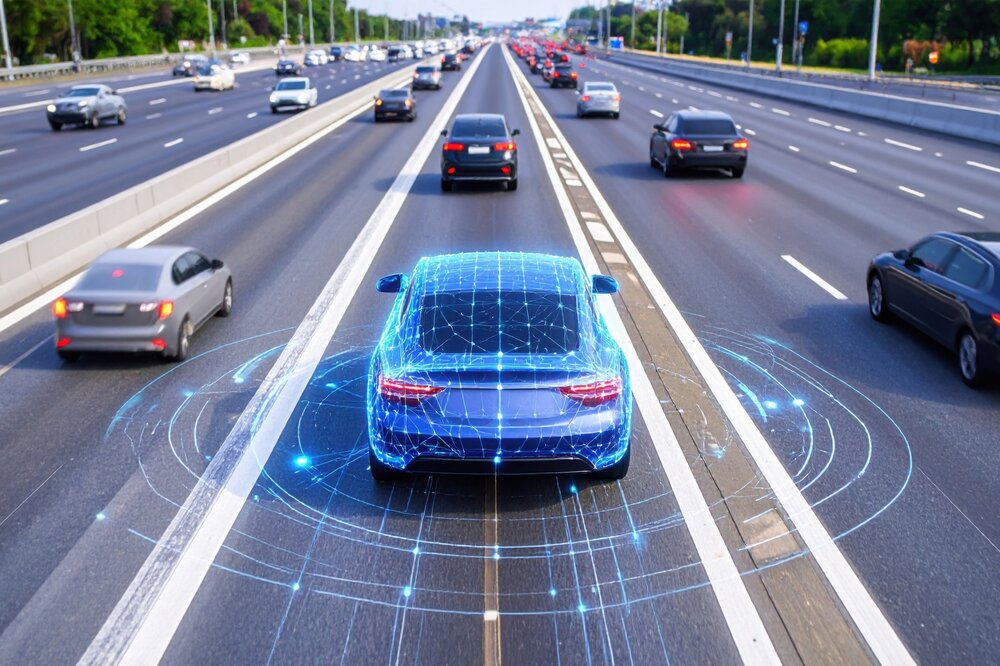
Applications of AI in the Electronics Industry
AI is present today in nearly all areas of the electronics industry. Nevertheless, there are key areas where the use of AI is particularly prominent: from the factory floor to the vehicle, from the sensor to the data center.
Edge AI and Industrial AI
Edge AI and Cloud AI are not opposites, but rather two architectures with different strengths. In practice, companies distribute workloads strategically: training, update, and analysis processes often remain in the cloud, while time-critical inference runs directly on the device or system on site. This division of labor is particularly relevant for industrial applications because data does not need to be transmitted unnecessarily, data security increases.
AIoT and Connectivity
The term AIoT stands for the convergence of AI, connectivity, and distributed systems. Value creation is increasingly generated in orchestrated systems rather than in individual components. This raises the bar for wireless modules, security chips, and full-stack integration. Fleets of gateways, sensors, and mobile robots track inventory, utilization, or movements in real time, enabling the dynamic adaptation of logistics processes and material flows.
Smart Mobility and Physical AI
AI for Smart Mobility is shifting the focus from infotainment to physical AI applications: vehicles and infrastructure must not only recognize their surroundings, but also interpret them in real time and use that information to make driving decisions.
With the Software-Defined Vehicle, the spotlight is shifting to a vehicle concept in which functions are increasingly software-based, updateable, and centrally orchestrated. The next step is the AI-Defined Vehicle: a vehicle in which AI not only optimizes individual functions but also increasingly shapes perception, assistance, interaction, and driving behavior.
>> More on the topic of automotive at electronica
AI on Microcontrollers and TinyML
The challenge is this: maximum intelligence with minimal energy and space constraints. This is precisely why efficient microcontrollers, integrated accelerators, and model-optimized toolchains are becoming strategic priorities. The TinyML community focuses on making ML applications competitive on microcontrollers. This is particularly relevant for sensor technology, wearables, and smart industrial devices.
What advantages does AI offer the electronics industry?
The use of AI pays off for companies in the electronics industry on multiple levels: from measurable efficiency gains in production to higher product quality and entirely new revenue models.
Efficiency and Cost Reduction
AI makes production processes along the entire value chain faster, more predictable, and more cost-effective.
- Lower scrap rates: AI-powered quality control detects defects consistently, scalably, and in real time, outperforming traditional manual inspection methods in terms of cost-effectiveness
- Fewer unplanned outages: Predictive maintenance analyzes vibrations, power consumption, or temperature directly during operation before deviations lead to failures
- More precise inventory control: AI-driven edge devices dynamically adjust material flows in real time
- Shorter process times: AI accelerates recurring processes, thereby directly reducing production costs
Quality improvement and automation
In electronics manufacturing, AI enables the transition from rigid processes to adaptive, self-learning systems:
- More reliable defect detection: AI-based vision systems immediately detect anomalies and adjust movements in real time
- Autonomous process control: Systems detect deviations, evaluate quality, and independently adjust processes—without manual intervention
- Higher throughput: Adaptive, learning systems increase both reliability and production output
New business models and innovation
AI is transforming not only processes but also the way electronics companies create value and generate revenue:
- Upgradable products: Hardware becomes a platform: Features are unlocked, improved, or personalized after the fact
- New revenue models: Device-as-a-Service models shift the focus from device sales to availability, performance, and data-driven optimization
- Recurring revenue: Lifecycle services and software revenue are increasingly replacing traditional unit-based margins
Challenges and limitations of AI implementation
AI projects rarely fail due to the technology itself—more often due to data quality, integration hurdles, or a lack of expertise. Companies should be aware of these challenges before scaling AI solutions:
- Data and integration: Integrating AI into existing IT landscapes is complex and requires robust, realistic data in sufficient quantity and quality
- Hardware and energy requirements: Low-power edge systems provide only limited resources for computing and security functions
- Skilled personnel and expertise: There is a structural shortage of skilled personnel with AI expertise—both in development and operations
- Security and Trust: Secure AI systems can only be scaled on trustworthy hardware, secure firmware, and updateable platforms
Regulatory framework
In addition to technical hurdles, a growing regulatory framework is defining the rules of the game for AI deployment in the electronics industry:
- EU AI Act: Classifies AI applications into four risk categories and could become the global de facto standard, similar to the GDPR
- Cyber Resilience Act (CRA): Requires Security-by-Design, updatability, and systematic vulnerability management for all products with digital elements sold in the EU – implementation deadline by 2027
- CSRD/ESG: Raises expectations for transparency regarding energy consumption, supply chains, and corporate governance
In the long term, only those applications that ensure robust, CRA-compliant, and secure use will prevail. With the AI Act, the EU is strongly committed to harmonized standards to create legal certainty for manufacturers and users alike.

What trends are shaping AI in the electrical industry?
The electronics industry is on the verge of a profound transformation—driven by AI architectures that are moving ever closer to the device and business models that are being fundamentally redefined. These trends will significantly shape the electronics sector in the coming years:
Software-defined products and new value creation models
The market is increasingly shifting toward software-defined, updateable products: Value is no longer created solely through the sale of hardware, but through features, data, and services across the entire product lifecycle. Companies that shape this transition early on secure recurring revenue through lifecycle services, secure updates, and data-driven optimization. In the future, margins will be generated less through component volumes and more through system integration and platform economics.
Advanced Packaging and New Chip Architectures
As AI demands rise, traditional chip architectures are reaching their limits. Advanced packaging approaches such as 2.5D/3D integration, chiplets, and system-in-package enable higher power density in a more compact form factor—a decisive factor for energy-efficient AI systems. At the same time, Arm-based architectures and specialized NPUs are continuing to gain importance over traditional x86 components.
Industry 4.0 and Connected Manufacturing
In automation, AI represents the transition from rigid process logic to adaptive, learning systems—relevant wherever systems not only execute tasks but also detect deviations, evaluate quality, and autonomously adjust processes. Physical AI at the edge is gaining increasing importance in robotics and machine vision. This makes networked production environments not only more efficient but also more resilient to disruptions and fluctuations.
AI Integration in Components
Specialized semiconductors and system architectures are becoming increasingly important: from NPUs to AI microcontrollers and sensor fusion to secure embedded platforms. AI is increasingly embedded deeper into individual components. Intelligence no longer arises solely at the system level, but directly within the sensor, the chip, and the device. This trend places new demands on interoperability, standardization, and secure update mechanisms.
Experience AI in the electronics industry at electronica
From November 10–13, 2026, electronica in Munich will bring together the entire electronics value chain: 3,500 exhibitors from 60 countries will showcase their offerings across 18 halls, ranging from semiconductors to embedded computing and automotive. The trade show covers the entire relevant technology spectrum and directly connects chip manufacturers, system integrators, developers, and decision-makers. AI solutions are not only presented there but can also be compared live, discussed, and experienced in a practical setting. New this year: the edge lab LIVE, which allows visitors to interactively experience edge environments and AI applications.
>> Reasons to visit the trade fair
You’ll find these AI solutions at electronica
From AI chips and embedded platforms to complete automation solutions: electronica 2026 showcases the full spectrum of AI technologies for the electronics industry:
- Semiconductors & AI chips: NPUs, SoCs, AI accelerators, and energy-efficient embedded processors for demanding AI applications
- Embedded AI & Edge Computing: Modules, systems, and platforms for AI inference directly on the device—without cloud dependency
- IoT & Sensors: Gateways, sensors, and AIoT solutions for connected, intelligent systems
- Automation & Robotics: AI-powered quality control, vision systems, and predictive maintenance for electronics manufacturing
The supporting program on the topic of artificial intelligence
In addition to the exhibition, electronica 2026 offers a high-caliber supporting program focusing on AI, Edge AI, AIoT, and the future of the electronics industry:
- Technical presentations and panels: Expert contributions on Edge AI, AIoT, Smart Mobility, and AI hardware
- IIoT Forum: Open discussion on the Industrial Internet of Things and AI in manufacturing
- Circular Economy Forum: AI in the context of sustainability and product lifecycle
- edge lab LIVE: Experience embedded technologies and edge environments interactively – premiering at electronica 2026
- Networking events: Direct exchange with decision-makers from across the entire supply chain
Tip: Be sure to attend the electronica Automotive Conference on November 9, 2026, which will focus on in-vehicle AI, software-defined vehicles, and Smart Mobility.
Why a visit to electronica is worthwhile
electronica 2026 is a must-attend event for anyone who wants to not only observe AI in the electronics industry but also actively shape its future:
A condensed market overview
3,500 exhibitors from 60 countries will present the full state of the art in AI technology for electronics—all concentrated into just four days in Munich. Nowhere else can you get such an efficient overview of the entire spectrum, from semiconductors to embedded computing to automotive.
Experience concrete solutions live
Products, systems, and AI applications can be discovered, compared, and discussed directly with manufacturers at the booth—not just viewed in brochures or online demos. This saves time and provides a solid basis for decision-making.
Networking on equal footing
Top decision-makers, developers, and buyers from across the entire value chain come together in one place. Direct interaction with industry representatives and partners is often more valuable than any trade publication.
A solid foundation for investment decisions
Anyone planning AI investments needs guidance. electronica provides direct market comparisons and thus the foundation for strategic technology and procurement decisions.

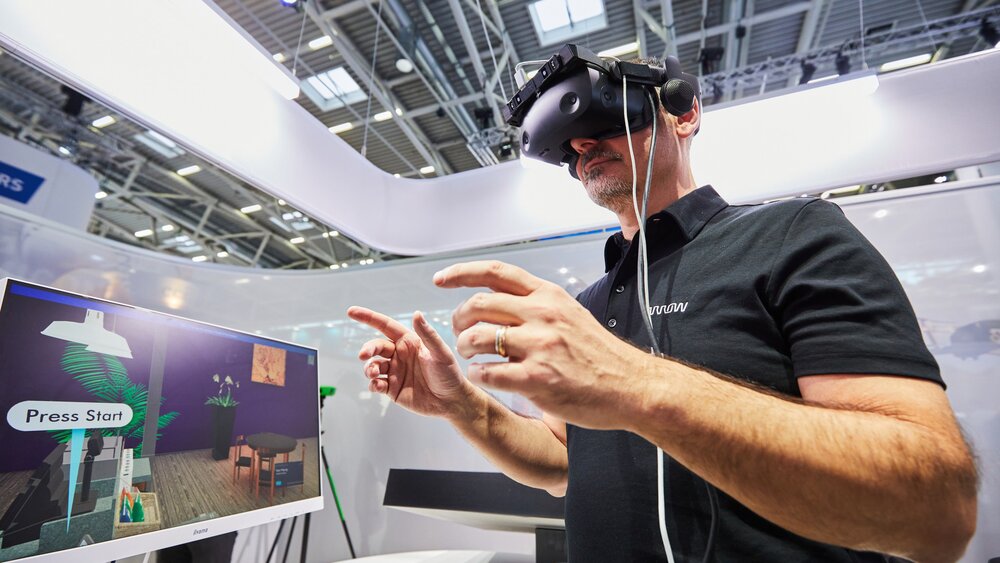
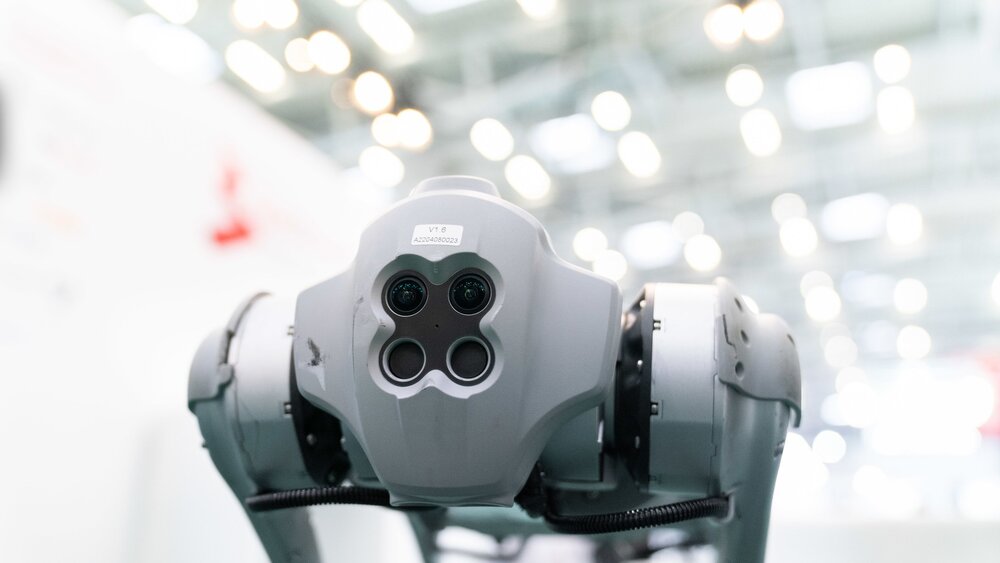
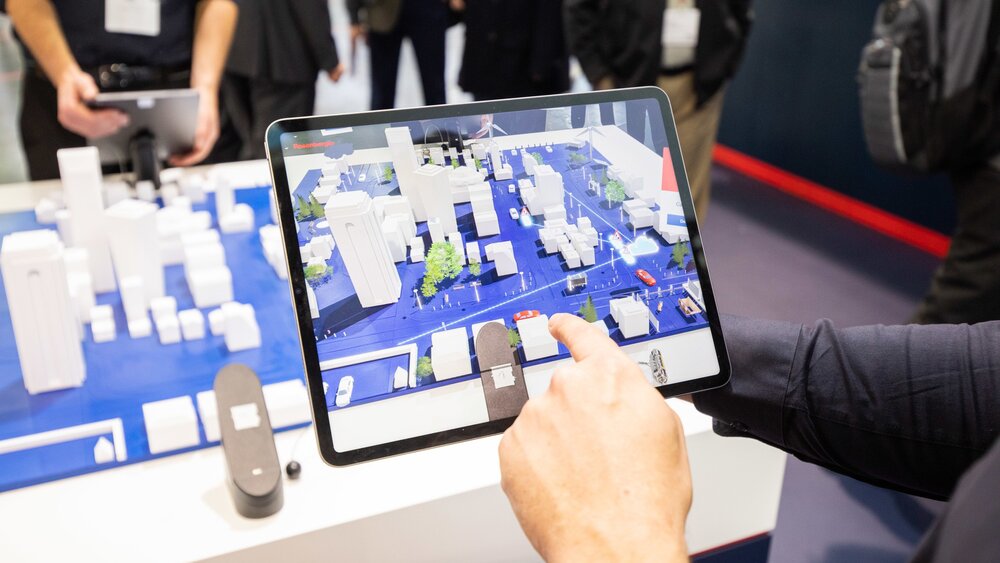
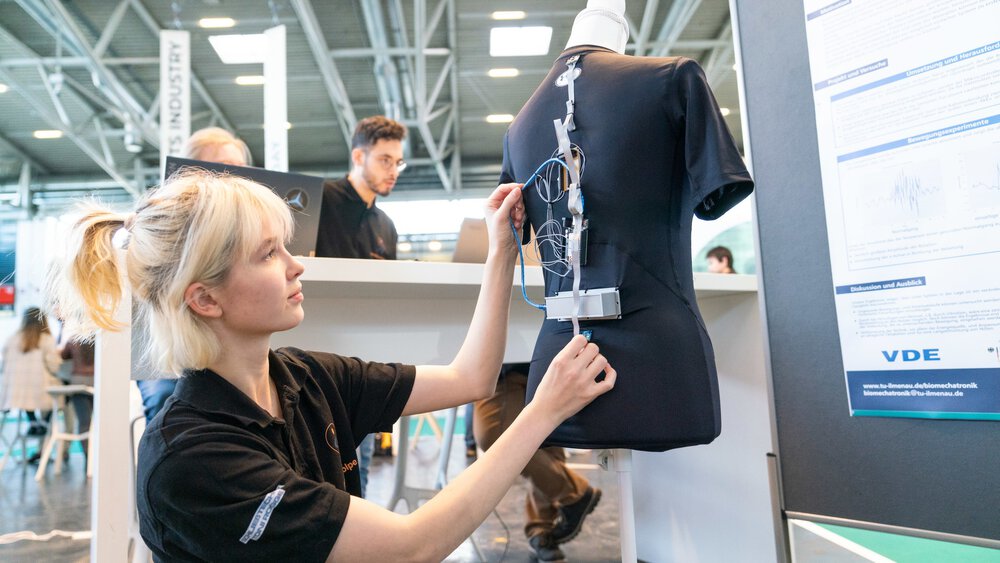





Exhibitors in the field of artificial intelligence (AI)
Leading companies in the electronics industry will present the latest products and solutions in the field of AI at electronica 2026. You can see which industry giants and up-and-coming companies will be there in the exhibitor directory.
Frequently Asked Questions about Artificial Intelligence in the Electronics Industry (FAQ)
AI is primarily used in industrial automation, Smart Mobility, the energy sector, and embedded systems. In other words, wherever large amounts of data need to be processed in real time and complex systems must be controlled autonomously.
AI is used at various levels—from the cloud all the way down to the device. Edge AI processes data in real time on site, while embedded AI models run directly on microcontrollers with minimal power consumption.
Sensors and IoT systems provide the data foundation for AI. AIoT—the combination of AI and IoT—enables intelligent, connected systems that adapt and optimize themselves autonomously.
TinyML enables AI inference directly on resource-constrained hardware. Specialized microNPUs and optimized models deliver intelligent functions with minimal power consumption. This is particularly relevant for wearables, sensor technology, and industrial end devices.
The biggest hurdles are data quality, integration into existing IT landscapes, and the shortage of skilled workers. Added to this are hardware and energy requirements, as well as regulatory mandates such as the EU AI Act and the Cyber Resilience Act.
AI is particularly worthwhile when there is a sufficient data foundation, scalable processes, and a clearly defined use case. A particularly high ROI is achieved in quality control, predictive maintenance, and software-defined products.
At electronica, all players in the electronics value chain come together—from semiconductor manufacturers to companies in the automotive and industrial sectors. Nowhere else can AI technologies be compared so comprehensively and discussed directly with manufacturers.
At electronica 2026, edge AI solutions, AIoT platforms, AI chips, embedded AI modules, and AI-powered automation solutions will be showcased. These can be experienced firsthand at the edge lab LIVE, among other venues.
Exhibitors include Infineon, STMicroelectronics, NXP Semiconductors, Advantech, and Kontron, as well as many others listed in the exhibitor directory.
electronica is particularly relevant for developers looking to evaluate AI technologies, for decision-makers seeking a market overview, and for buyers and sales managers searching for new solution partners.